All Projects
Experiment
2026
UX Designer | Content Designer
Mortgage Assistant | Make-a-thon
A contest to use Figma Make and create a feature/an app. It went swimmingly.

Overview
Mortgage products traditionally start with rates, eligibility criteria and calculators. We wanted to start somewhere different: with the customer.
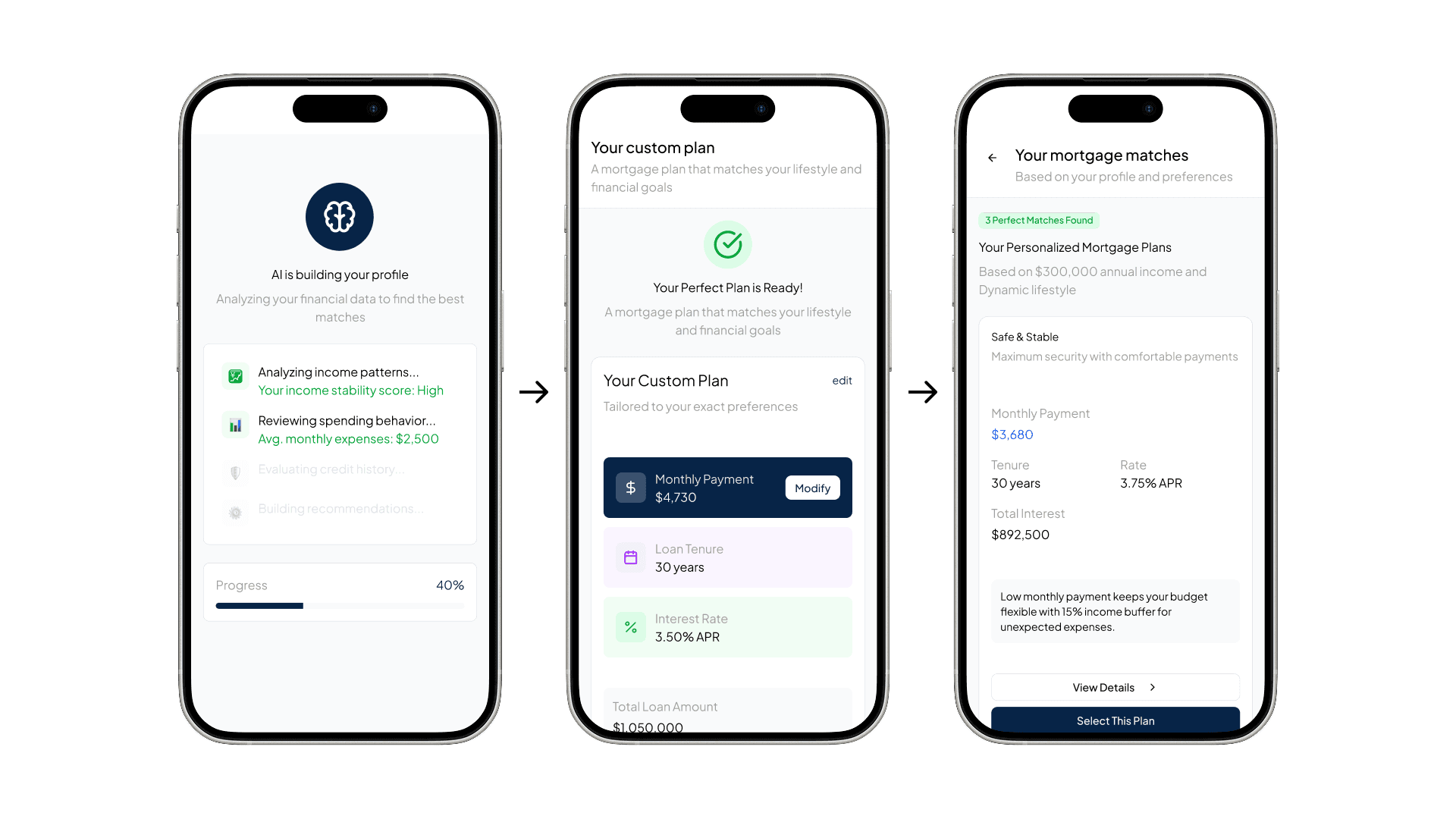
We designed an experience that uses open banking data to understand a customer's financial behaviour, lifestyle and repayment capacity, then helps them discover a mortgage option that realistically works for them.
Our concept was placed Top 5 across the bank and was presented to the Group CEO.
The problem
Banks constantly compete on mortgage rates, but a lower rate doesn't necessarily solve the bigger problem.
For many customers, taking on a mortgage can feel intimidating. It's a significant, long-term financial commitment, and figuring out what you can realistically afford often means navigating calculators, comparing products and doing hours of research before even speaking to a bank.
The journey assumes customers already know what they're looking for. We wanted to change that.
Traditional eligibility doesn't tell the whole story
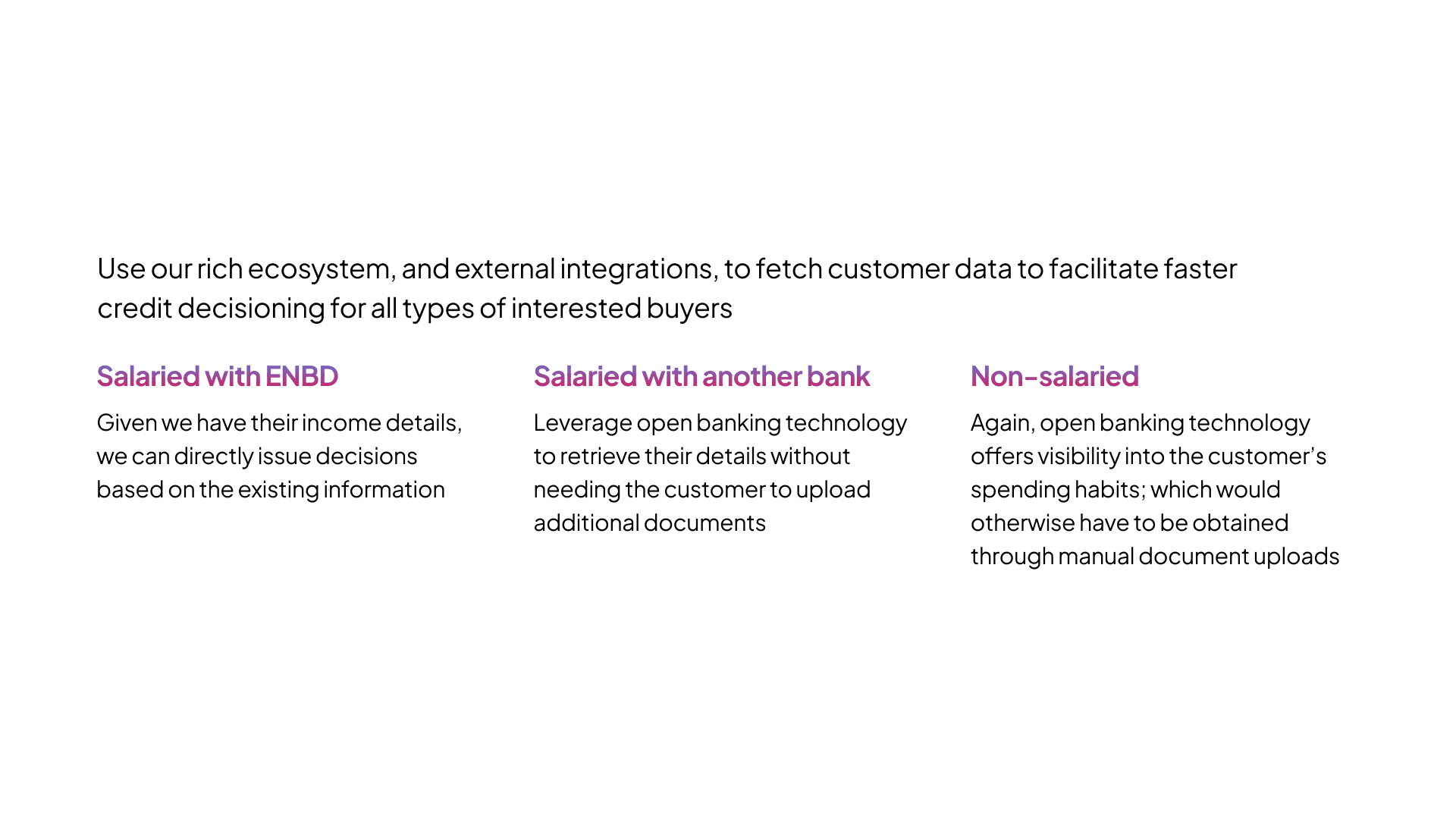
We also identified another problem. Not everyone earns money through a predictable monthly salary.
Freelancers, contractors, self-employed professionals and people with multiple income streams may have healthy finances, strong credit histories and the ability to comfortably repay a mortgage. But traditional mortgage journeys aren't always designed around them.
The opportunity
Instead of asking customers to research mortgages themselves, we asked:
What if ENBDX could do the research for them and show them a realistic path to home ownership?
Rather than beginning with loan amounts and interest rates, the experience could begin by understanding the person applying.
A mortgage that starts with your life, not a calculator
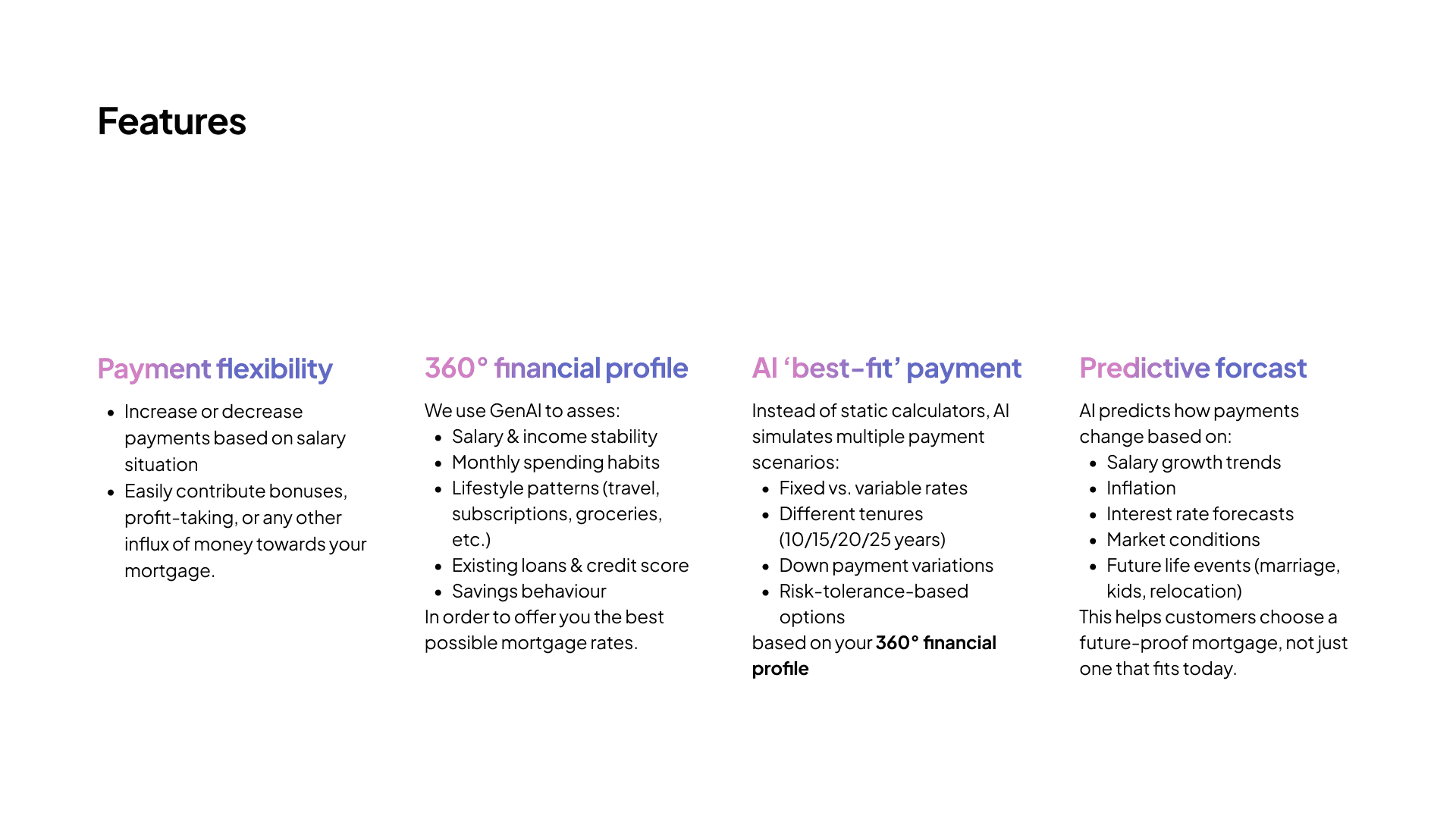
We envisioned an intelligent Mortgage Assistant built directly into ENBDX.
With the customer's consent, the experience uses open banking technology to analyse their broader financial picture, including income, spending patterns, existing commitments and repayment capacity. It then translates that information into mortgage options that are more relevant to the customer's actual lifestyle.
Instead of asking: How much do you want to borrow?
We could help answer: What could comfortably work for you?
How it works
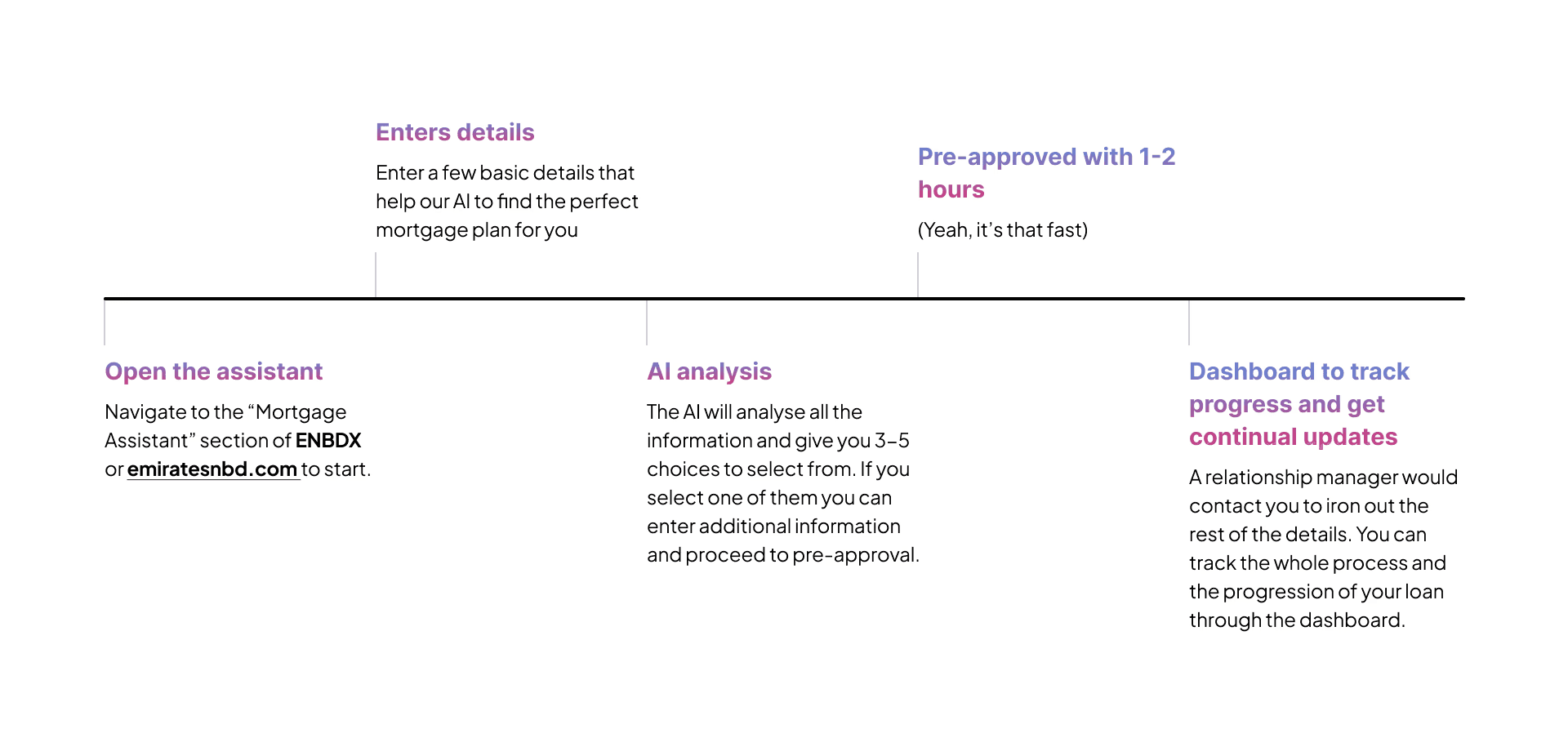
01 — Understand
The customer connects their financial information through open banking, giving the experience a more complete picture of their finances.
02 — Analyse
The experience looks at factors such as income, regular expenditure, financial commitments and spending behaviour to estimate a comfortable repayment capacity.
03 — Personalise
Rather than presenting every available mortgage product, ENBDX identifies options that better align with the customer's financial situation.
04 — Explain
The customer sees what they could potentially afford, why that option suits them and what the long-term commitment could look like.
05 — Act
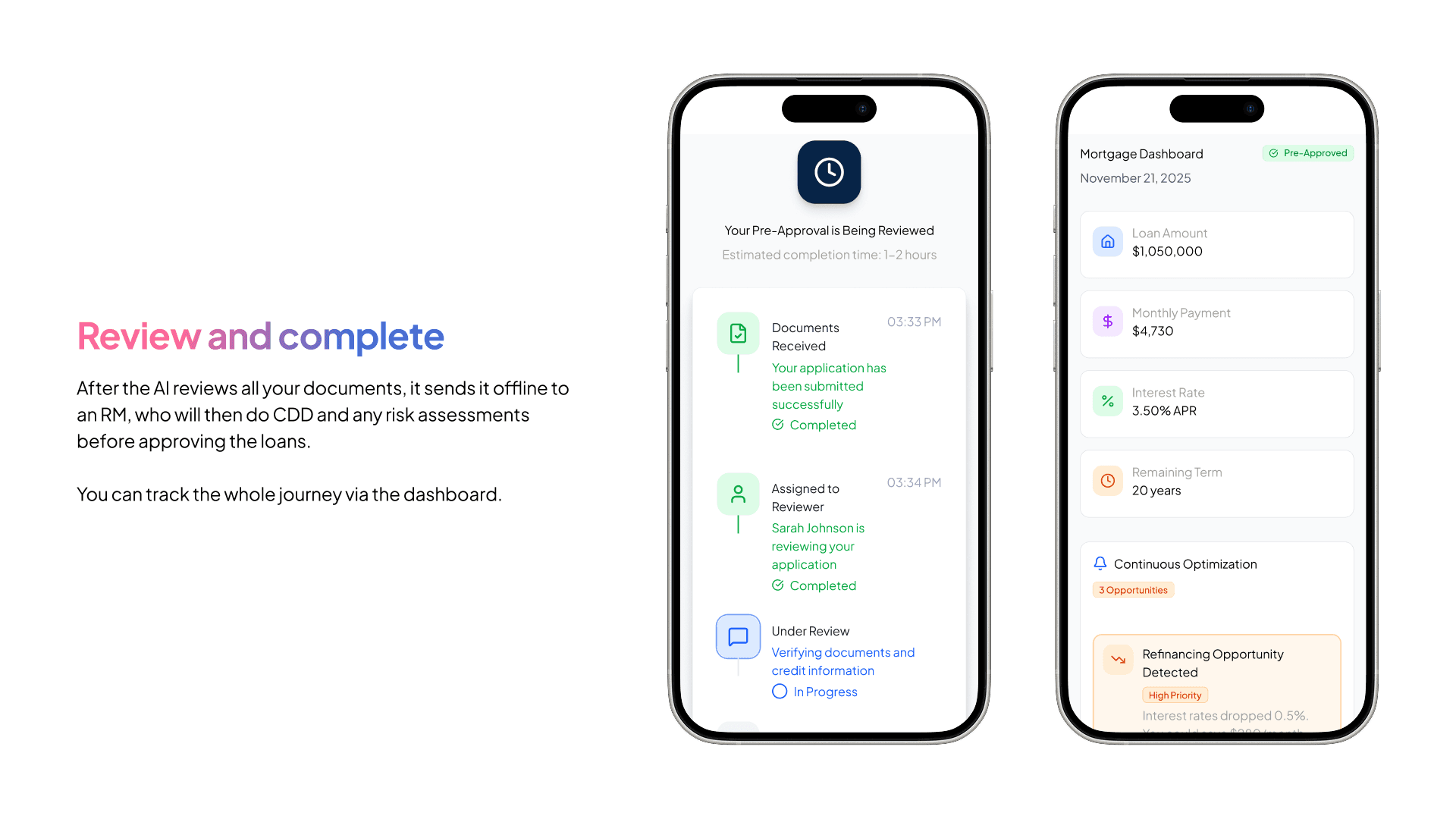
Once they feel confident in the recommendation, they can move from exploration into the mortgage application journey.
Designing for confidence
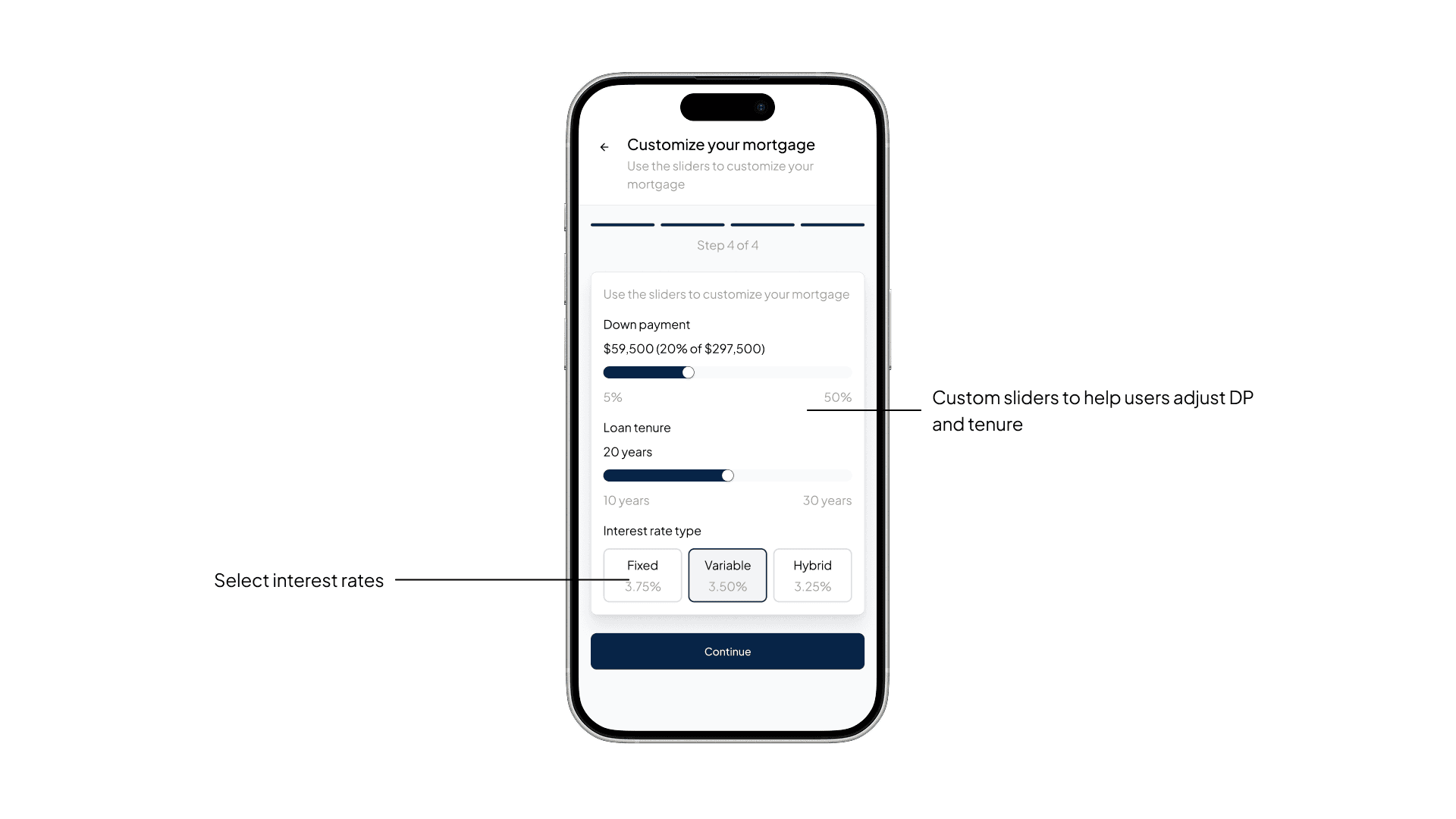
One of the most important parts of the concept wasn't simply calculating affordability. It was reducing uncertainty.
Mortgages contain large numbers, long repayment periods and terminology that can make even financially capable customers hesitate. The experience therefore needed to translate financial analysis into information people could actually act on. Instead of overwhelming customers with products, rates and calculations upfront, we progressively introduced information based on what mattered to their decision.
Understand first. Recommend second. Apply third.
Rethinking affordability
Traditional affordability can be heavily influenced by what someone earns on paper. Open banking gave us the opportunity to explore something more contextual:
How does this person actually manage their money?
Someone with an unconventional income could still demonstrate consistent earnings, responsible spending behaviour and strong repayment capacity. By looking at the customer's wider financial behaviour, the experience could help surface viable customers who might otherwise assume that home ownership wasn't available to them.
The experience principle
Don't make customers become mortgage experts.
A customer shouldn't need to understand every mortgage product before they can make their first decision. ENBDX already has the potential to understand much of their financial world. Our concept explored how that intelligence could be used to reduce the research customers need to do themselves. The role of the Mortgage Assistant wasn't to give customers more information. It was to give them more clarity.
Value for the customer
Less research: Customers don't need to manually compare dozens of mortgage scenarios before understanding what may work.
More relevant options: Recommendations are grounded in the customer's financial behaviour rather than starting from a generic product catalogue.
Greater confidence: Customers can understand what a mortgage could mean for their monthly finances before committing to an application.
A more inclusive starting point: Customers with less conventional income structures have an opportunity to present a broader picture of their financial health.
Value for ENBDX
The concept also changes where the bank enters the customer's home-buying journey. Instead of waiting until someone has already researched mortgages, calculated affordability and decided to apply, ENBDX can become the place where that exploration begins.
This creates an opportunity to move the relationship from:
“Here are our mortgage rates.”
to:
“Let's figure out what works for you.”
The bigger idea
Mortgage innovation doesn't necessarily mean creating another mortgage product.
Sometimes, it means redesigning the moment before the product.
By combining open banking, personalisation and clearer financial guidance, we explored how ENBDX could lower the psychological and informational barrier to entering the mortgage market.
The result was a simple shift in perspective:
Don't start with the mortgage.
Start with the person.
Gallery


